Choosing the Right Materials for a Long-Lasting Home
When designing or renovating a space, it is remarkably easy to fall in love with aesthetics alone. High-end surface finishes, sleek textures, and trendy color palettes dominate social media boards and design magazines. However, in the realm of civil engineering and interior architecture, true quality is measured not by how a material looks on day one, but by how effortlessly it ages over years of daily wear and tear. Good building and interior materials don’t just look visually appealing—they maintain their structural integrity, resist environmental degradation, and age gracefully.
To build spaces that remain pristine over time, project owners must prioritize long-term durability, especially in high-traffic and high-touch zones such as kitchen counters, living room flooring, and storage cabinetry. Making informed, high-performance material selections early in the planning phase prevents expensive repair cycles, avoids premature replacements, and ensures your property retains its modern, fresh look for decades.
1. Structural Wood & Joinery: Engineered Wood vs. Softwood
High-touch furniture pieces, wardrobes, and kitchen cabinetry endure constant physical interaction, load stresses, and environmental shifts in humidity. While natural softwoods may appear attractive initial options, they are notoriously susceptible to surface scratches, moisture absorption, warping, and termite vulnerability—issues particularly prevalent during monsoon seasons across Indian climatic conditions.
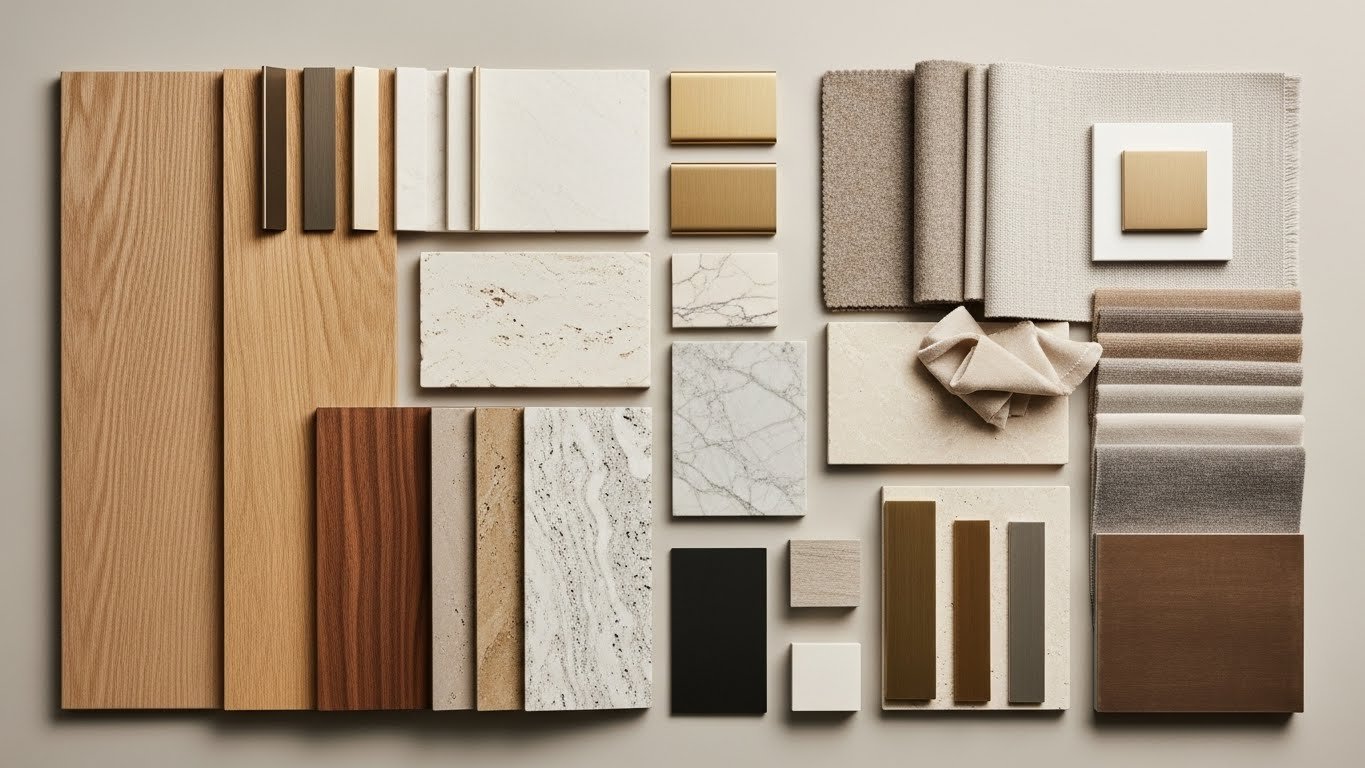
For long-lasting structural joinery, modern interior execution heavily favors high-density water-resistant (HDWR) boards, commercial-grade BWR (Boiling Water Resistant) plywood, or premium engineered wood. When paired with high-pressure laminates or acrylic finishes, these materials offer exceptional scratch resistance, superior load-bearing capacity, and minimal expansion under temperature fluctuations. Investing in factory-pressed, edge-banded engineered panels ensures seamless functionality and a clean, contemporary finish that stands up to heavy usage.
2. Kitchen Worktops: Harnessing Natural Quartz & Granite
The kitchen countertop is arguably the hardest-working surface in any residential or commercial property. It is subjected to high heat, heavy impact from heavy cookware, abrasive cleaning agents, and potential staining from oil, turmeric, and acidic foods. Selecting fragile or porous natural stones like soft marble for primary kitchen counters frequently leads to deep staining, etching, and surface cracking over time.
To ensure maximum durability without compromising on modern luxury, civil experts recommend installing premium-grade natural granite or engineered quartz:
-
Granite: Highly revered for its extreme hardness, natural heat resistance, and near-zero porosity when properly sealed. It handles heavy-duty Indian cooking requirements effortlessly while requiring minimal upkeep.
-
Engineered Quartz: Manufactured by combining natural quartz crystals with high-performance resins, offering an entirely non-porous surface. It provides incredible stain resistance, hygienic anti-bacterial properties, and a wide array of uniform, modern colors and marble-like veining patterns.
3. Textiles, Upholstery & Tactile Balance
Beyond rigid building materials, soft furnishings and surface textures play a pivotal role in the longevity of an interior ecosystem. High-use seating areas, dining chairs, and decorative wall panels require fabrics that balance physical tactile comfort with high stain resistance and easy maintenance routines. Opting for performance fabrics treated with water- and stain-repellent coatings ensures that accidental spills are easily wiped clean without destroying the underlying fibers.
From a visual design perspective, creating timeless interior depth involves strategic contrast. Mixing matte-finished surfaces with subtle glossy accents—such as pairing matte cabinetry with a high-gloss backsplash or textured wall paint with polished metal hardware—prevents room interiors from feeling flat. This thoughtful juxtaposition creates visual depth while disguising minor smudges or wear over time.
4. Preventative Decisions for Sustainable Living
Durable construction and interior design are never about cutting corners; they are about strategic material allocation. By selecting engineered wood solutions, robust stone countertops, and stain-resistant finishes right at the project's inception, you protect your structural investment from premature degradation. Thoughtful material selection ultimately saves substantial maintenance funds down the line, giving you a space that remains functional, structurally sound, and beautifully preserved for years to come.